This awesome journal was created by the artist Bellino from his origianl painting of the late great Anthony Bourain, and is in Tribute to Tony. There are some of Anthony Bourdain's most famous quotes on life, work, travel, and eating for the pleasure of it all.
105 Pages with 95 blank pages to write recipes, travel adventures and info, stories, poems, take notes, whatever you like, it's yours to do with as you please. Just having Anthony Bourdain will inspire.
This book is 6" X 9" - With 95 Blank Pages and Tony's most famous quotes to boot. You Love Tony, you'll Love this book, so get yorus today.
GIFT IDEAS : Birthdays, Christmas, Bon Voyage, Friendship Gift, and any occasion.
A Wonderful Image of the Late Great ANTHONY BOURDAIN
You LOVED TONY - Pay TRIBUTE
This TRAVEL FOOD JOUNAL Features this Beautiful Painting of ANTHONY BOURDAIN
The Late Great FOOD WRITER - WORLD TRAVELER
And DOCUMENTOR of PEOPLE PLACES & FOOD The WORLD OVER
If YOU LIKE KEEPING ANY KIND of JOURNAL & Are a FAN of ANTHONY'S
Or YOU KNOW SOME WHO is, this JOURNAL MAKES a GREAT GIFT
Ask a cookbook author or a chef for their opinion on the best Italian cookbooks and the result is likely a love letter to food in general. Italian cuisine has captured hearts (and stomachs) the world over because it is comforting, satisfying, economical, and easy to prepare, making it as loved by those who are cooking it as those to whom it is served.
When it comes to compiling a list of the best Italian cookbooks, certain books come up again and again. What seems to be a common thread among these classics is straightforward instructions that work, explanations that place recipes in a cultural and historical context, and descriptions that help to understand ingredients and how to use them. These things make us good cooks and, combined with the personality of the authors who manage to convey the very essence of Italian food—the smells of the kitchen; the flavors and freshness of seasonal ingredients; the unfussy preparations—make the following Italian cookbooks universally timeless.
From award-winning, bestselling “queen of Italian cooking” (Chicago Tribune), a culinary bible for anyone looking to master the art of Italian cooking.
Essentials of Italian Cooking is a culinary bible for anyone looking to master the art of Italian cooking, bringing together Marcella Hazan’s most beloved books, The Classic Italian Cook Book and More Classic Italian Cooking, in a single volume. Designed as a basic manual for cooks of all levels of expertise—from beginners to accomplished professionals—it offers both an accessible and comprehensive guide to techniques and ingredients and a collection of the most delicious recipes from the Italian repertoire. As home cooks who have used Marcella’s classic books for years (and whose copies are now splattered and worn) know, there is no one more gifted at teaching us just what we need to know about the taste and texture of a dish and how to achieve it, and there is no one more passionate and inspiring about authentic Italian food.
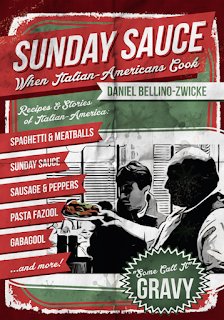
"Come here kid, lem-me show you something.You never know when you're gonna have to cook for 20 guys some day." Pete Clemenza says to Michael Corleone (Al Pacino) in Francis Ford Coppola's The Godfather. It's one of the most famed movie scenes in history, and of great importance to Italian-Americans. Clemenza is making "Gravy" aka Sunday Sauce, the Supreme Dish of Italian-America, and the dish that brings Italian Families together each and every Sunday. Learn How to Make Clemenza's Sunday Sauce, Meatballs, Pasta Fazool, Momma DiMaggio's Gravy, Goodfellas Sauce, and all of the great favorites of The Italian American Table. Cook Sinatra's Spaghetti & Meatballs, Italian Wedding Soup and more, and delight in the many stories and factual information written by Italian Food & Wine Writer Daniel Bellino Zwicke. This book is filled with Joy & Love, and you will get many years of both, reading, cooking and eating the dishes in SUNDAY SAUCE "When Italian-Americans Eat".Do you Love Goodfellas, The Godfather, and Italian Food? Of course you do. Learn How to make Clemenza's Brooklyn Mob War Sauce for 20 people some day. Remember that scene in Francis Ford Coppola, Mario Puzo classic Film Trilogy of the Corleone Family of Sicily and Brooklyn, New York. Recipes in Italian-American New York Author Daniel Bellino Zwicke's Best Selling Cookbook (2 Years Amazon Kindle)
SUNDAY SAUCE includes; Frank Sinatra Sunday Sauce, Dolly Sinatra's Spaghetti Meatballs, Joe DiMaggio 's mom's Sunday Gravy, and Charlie Scorsese making Sauce in Prison in Martin Scorsese's GOODFELLAS - starring; Robert DeNiro, Joe Pesce, and Ray Liotta making Veal & Peppers and Sunday Sauce. And by-the-way, Joe Pesci and Liotta are both Italians from New Jersey, so they know their stuff when it comes to Italian Food and all things Italian (Mafia speak and so-forth).
SUNDAY SAUCE SAUSAGE MEATBALLS BRACIOLE PASTA
Editorial Reviews :
Review - Great Recipes & Stories of Italian-America .... I didn't know what to expect before I loaded this on to my Kindle and started reading. The premise of the novel is a set of Italian recipes with each one accompanied by a story. This is the first of its kind that I've ever read or even heard of, so I thought I'd give it a chance and wasn't disappointed after finishing it a few days ago.Daniel does a great job of creating the recipes and making sure that each one feels authentic and taste wonderful. All of the stories with each recipe is also well done and does a great job of connecting the food to the story. It's hard to figure out which one is more enjoyable. The story side or the recipe side of this novel, but I had to chose it would be the recipe side of the novel as the recipes are truly great and highlight Italian cuisine.If you're looking for a great cook book to give you some great Italian dishes to try out all courses, with a few stories to read while your food is cooking, then this is definitely the book you've been looking for. As it does a splendid job of creating wonderful, quality meals..
Buy This One ...
This is The Best Italian Cookbook Ever !
Authentic Italian Cooking ... Many of the recipes are very close to those, my grandmother,who was from Sicily, made. These recipes are very good. My only critique is that the book could be edited better, but the recipes are very good. Buy the book if you want authentic italian recipes.
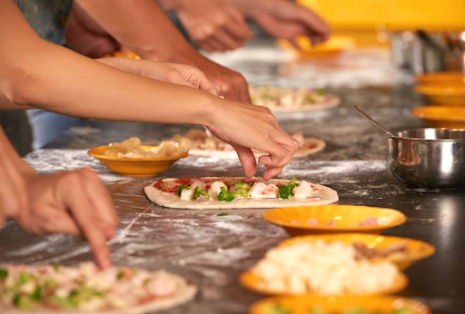
Have a hands-on experience and learn to make an Italian meal of 4 dishes
Prepare traditional dishes using fresh hand-picked ingredients
Enjoy your freshly cooked meal accompanied with wine after the class
Receive a cooking diploma and the recipes for each dish
CLASS DESCRIPTION :
Our experience begins with a warm welcome from our team who will guide you throughout this awesome class, describing what we will do in the following few hours.
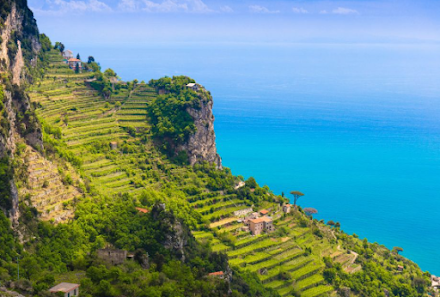
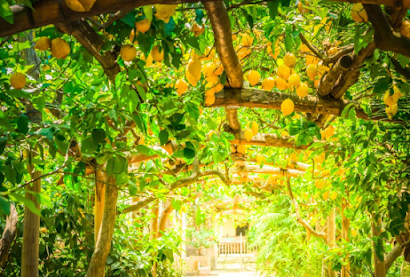
We will start with a tour of our typical terraced gardens, an ancient local cultivation method that represent a resource of sustainability and environmental conservation on the Amalfi Coast. Here we will stroll by and linger at the Lemon Grove, the Olive Grove and the Vineyard, where you will be provided with significant information on the importance of these groves in the Mediterranean diet and how our worldwide famous Limoncello, olive oil and wine are produced.
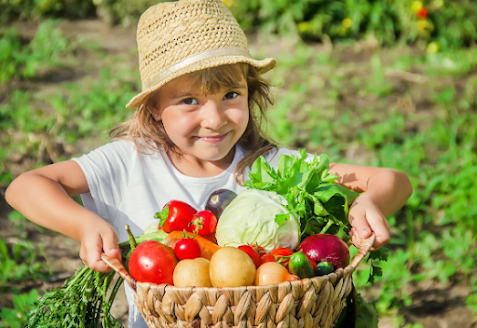
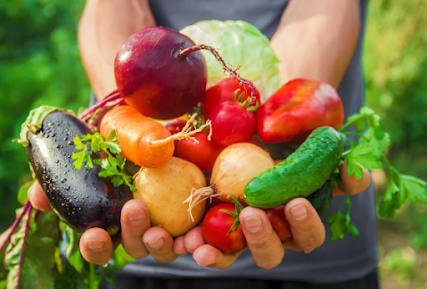
We will continue our visit to the vegetable garden, and after wearing gloves and collecting wicker baskets, we will proceed with the picking of the freshest seasonal veggies and fragrant herbs that we will later use for the preparation of the delicacies during the class.
Once we have put on our kitchen aprons we will be ready to get down to business and learn the secrets of preparing exquisite traditional dishes, which we will then go on to enjoy all together during a wonderful meal accompanied by local wine, Limoncello and real Neapolitan espresso.
As a perfect finale to our gastronomic experience, feel free to relax in the relaxation area at the lemon grove, sipping a glass of wine or lulling yourself in our comfortable hammocks enjoying the splendid coastal view.
It can be hard to remember, but coffee isn’t just a delicious liquid drug — at its most basic level, it’s a plant that people sow, grow, and harvest. There are plenty of kinds of coffee, too, and none as significant on the global market as coffee canephora, also known as robusta. That’s one of the hardiest, most caffeinated varieties of coffee. And while its counterpart arabica gets more attention for having a wider flavor profile, robusta is far less likely to be classified as “specialty” coffee. Both kinds’ global popularity is thanks to Europe’s carving up of coffee-growing regions such as East Africa and Southeast Asia for export: The Dutch taking coffee to Indonesia and enslaving locals is how we got the now-common term “java,” for example.
Political theorist Carl Schmitt called such adventures in mercantilism the beginning of the “Eurocentric nomos of the Earth” — he’d know, given his support of the Nazi party. Thanks to coloniality, numerous commodities like coffee became associated with Europe. In brief, naval travel and military technology allowed Spanish, Portuguese, and Dutch conquerors to leverage the addictive crop as one more line item in a growing global ledger. Propaganda supported the expansion. There was Edwin Lester Linden Arnold’s handbook for coffee growing in 1886, published one year after the Berlin Conference began cutting up Africa into new districts, and J.W.B. Money’s Java; or, How to Manage a Colony. Both treat the people harvesting large-commodity crops including coffee as inferior, which means coffee and subjugation go hand in hand.
The next generation of imperialists including the young United States took to these lessons and examples to enslave people the world over for their own sugar, spice, tea, and coffee. Take the Belgians’ colonization of the Congo in the late 1800s, a premier region for rubber and robusta coffee. It was the Belgians who named robusta coffee as such due to its “robust” resilience to pestilence. Locals were worked to death, often from exhaustion but also from acts of violence at the hands of Belgian exporters and guards. And, as Adam Hochschild writes in King Leopold’s Ghost, Africans were not to be paid in francs for their labor, instead receiving cloth, beads, and brass rods. “Money in free circulation might undermine what was essentially a command economy,” Hochschild writes.
The impacts of these actions live on. Burundi — also colonized by Europe — is today one of, if not the, poorest country in the world and depends heavily on coffee exports. According to Standart magazine, the government tightly controls seed allowances, pays farmers only once or twice a year, and mandates that farmers sell their coffee as a low-grade commodity rather than a specialty. Vietnam, which has suffered numerous invasions over generations, is the second-largest coffee producer behind Brazil. And El Salvador’s political unrest and civil war in the 1980s can be traced back to the early occupation of coffee barons, including James Hill, an English businessman who became one of the country’s most infamous coffee oligarchs.
Mickey's Diner
MINNESOTA
No matter the ruination, the United States was eager for coffee to become part of its social fabric from the jump, and ingrained it has become. There’s evidence that suggests that coffee came to the East Coast in 1607 with English captain John Smith, and the drink became a backbone of the young new empire. A few centuries later, around the middle of the 20th century, the coffee break became a thing thanks to a greedy tie factory owner in Denver. In 1962, the International Coffee Agreements was established — actually a stabilizing move thanks to mandatory quotas on coffee imports — only to be blown up in 1989 amid market share disputes among producers and changing consumer tastes. Through it all, coffee burrowed deeper and deeper into the United States’ psyche.
Which is to say, diner coffee is, really, the improbable marriage of low prices and a hungry market. According to the Smithsonian Magazine, the first attempt at a diner came from Providence, Rhode Island, in 1872 in the form of a horse-drawn wagon serving cheap, hot food to people looking for late-night eats. And by 1924, the name for the “rolling restaurants” and “dining cars” became shortened to diner. As these casual restaurants multiplied (long before anything was even considered “ethical” or “fair trade certified”), coffee emerged as a cheap, on-demand menu staple. That coffee became part and parcel of Americana is thanks to these historical events, the rise of restaurants in the country writ large, and, of course, public relations. See: Denny’s partnership with Major League Baseball, chimerically combining the dark elixir, baseball, and Americana on color TV.
With the rise of Equal Exchange and fair trade certification in the 1980s and the proliferation of coffee chains around the world that have fueled consumer tastes for ever-higher quality products, coffee is continuing to evolve. As of 2023, Fairtrade International upped its minimum purchase per pound for certified coffee to $1.80, coffee workers at Starbucks and Peet’s locations throughout the country are unionizing for better pay and conditions, and fourth-wave coffee, with all of its possibilities, is either just over the horizon or already here (depending on whom you ask). But diner coffee, and the low-quality sourcing and methods used in its production, falls well outside of all that progress. It’s a relic in time, an artifact of an America not unlike the restaurants it’s poured in that are still somehow super cheap.
In truth, diner coffee can’t really change. There’s virtually no demand for that coffee to taste better, and supply for the commodity-grade staple is as abundant (for now) as it is unethical. As Michael Pollan might prescribe, drink coffee you can trace, drink only as much as you can afford to buy that is thoughtfully sourced, and buy mostly from small and direct-purchasing farms. But as the botanist also concedes, sometimes you still crave an Oreo.
The BENDIX DINER
Hasbouk Heights, New Jersey
On a spring afternoon in Sedona, Arizona, the Coffee Pot Restaurant is somehow as busy as many diners would hope to be during the morning rush. Servers in bright red T-shirts and aprons chat beneath southwestern motifs and rockscape paintings. Hiking through Red Rock State Park just outside of town can really sap your energy. So while there are vortexes that might refill that void, a damn fine cup of coffee also does the job.
But for all the health-focused marketing throughout the touristy town, Sedona hosts more places to get your aura photo taken than cafes with transparently sourced, fairly purchased coffee. So, Coffee Pot’s $3.75 cup of coffee will have to do.
No, it isn’t good for the planet. Or, most likely, for workers. But when there’s nothing much better around, and when the nostalgia hits, a cup of jet-black, bitter diner coffee remains an affordable, bottomless delight.
Greve in Chianti (the old name was Greve; in 1972 it was renamed Greve in Chianti after the inclusion of that area in the Chianti wine district) is a town and comune (municipality) in the Metropolitan City of Florence, Tuscany, Italy. It is located about 31 kilometres (19 mi) south of Florence and 42 kilometres (26 mi) north of Siena.
Sitting in the Val di Greve, it is named for the small, fast-flowing river that runs through it, is the principal town in the Chianti wine district which stretches south of Florence to just north of Siena. Until recently it has been a quiet, almost bucolic town because it was, and still is, well off the main roads.
Even in ancient days Greve was not isolated because it was well-connected by secondary roads to the Via Volterrana and via Francigena. Nowadays, it is connected to the A1 superstrada between Florence and Rome and the main road between Florence and Siena. The old road network ensured easy access to Florence and to other places such as Figline where its tradesmen and farmers found ready markets for their goods and produce.
History
The site of Greve and the surrounding territory has been long settled, probably well before the Etruscans and then the Romans dominated the area. Historical documents of the 11th century refer to an ancient monastic settlement on a nearby hill, which is now called the hill of San Francesco. Before the Franciscans established their monastery in the 15th century, an earlier monastery dedicated to Santo Savi had already been built, and also a small hospital. Larger scale settlement occurred in the 13th and 14th centuries.
Although an independent town for most of its history, Greve ultimately came under Florentine control and remained so until the Grand Duchy of Tuscany was absorbed into the unified Kingdom of Italy in 1861.
WINE PRODUCTION
With the enlargement of the Chianti wine district in 1932, Greve suddenly found itself in a noble wine area. The Chianti region supports a variety of agricultural activities, most especially the growing of the grapes that go into the world-famous Chianti and "Super Tuscan" wines. Olive oil production is another staple of the local economy. Extra virgin Tuscan olive oil is highly prized for its delicate flavor, as opposed to the stronger, thicker olive oils of the south. Truffle harvesting is a distinguishing feature of local food production. Both black and white truffles are hunted in Chianti. The region is also noted for its meat. The Cinta Senese pig is unique to this region and produces pork of superior quality. Wild game is a common feature on local menus, including rabbit, pigeon, venison, and, especially, cinghiale (wild boar). Greve is home to one of Italy's oldest and most renowned butcher shops, the Macelleria Falorni.
Due largely to this intense agricultural activity, and the wine and food production industries that have been built on top of it, since early medieval times, Greve evolved as the principal market town at the center of an (increasingly) densely populated area with an abundance of villages, parish churches, villas and castles. The latter were built mostly by the rich merchants and noble classes of Florence who enjoyed the country life, and developed their estates to earn additional income and also to supply their in-town tables.
The town of Greve's busy quaintness and the lushness and diversity of the undulating landscape which surrounds it, have long attracted tourists and travelers. The current flow of tourism to the area and the purchase of homes by both Italians and foreigners is fully integrated with viniculture, wine-making and various related enterprises to form a highly integrated and highly productive local economy.
"MY FAVORITE CHIANTI"
ART by Daniel Bellino
CASTELLO VERRAZZANO
GREVE in CHIANTI
CASTELLO VERRAZZANO
WINE CELLAR
CHIANTI VERRAZZANO
"My Favorite" says bestselling Italian Cookbook author